

Incarceration through his lens
Miyatake’s perspective on Manzanar and beyond
The Official Set Gallery
The Manzanar Official Set contains over 1,600 of Toyo Miyatake’s photographs from Manzanar curated by his son, Archie Miyatake. The Official Set is distinct from the Manzanar Portrait Studio collection because it includes a large number of Toyo Miyatake’s artistic landscapes and photos of everyday life at Manzanar. These photos provide a glimpse into Miyatake’s perspective. The gallery below represents the variety of subjects and events that Toyo Miyatake photographed during his time at Manzanar. Each image tells a unique story about various aspects of camp life.
Interactive image. You can zoom in to see more detail. Hotspot buttons on it open more information. Use Tab to move between them and Enter to open one.
Images in Context
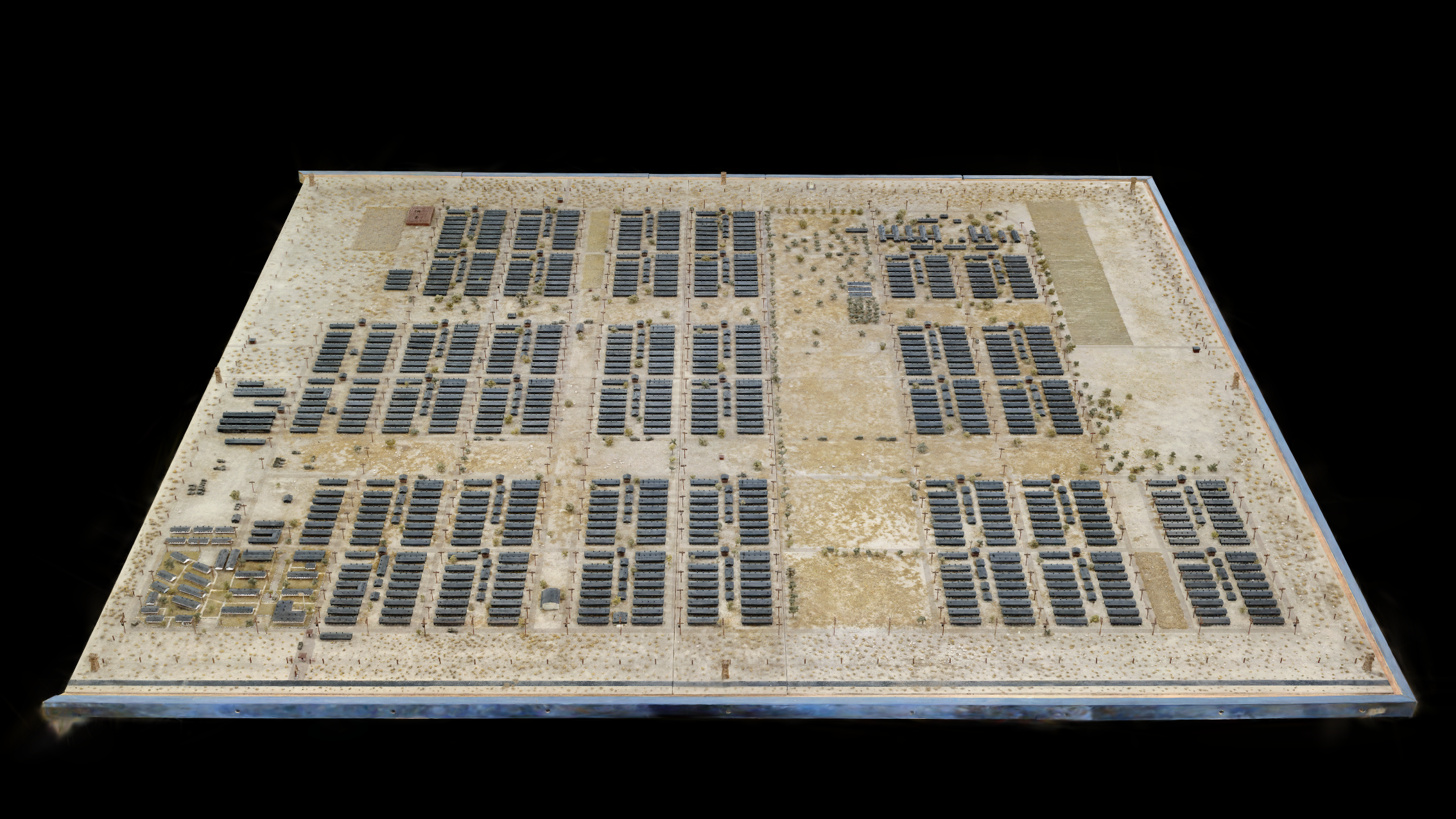
Within The Official Set, the location of where a number of photographs were taken was determined by referencing landmarks, camp maps, and information gleaned from the Manzanar Free Press. The interactive map below displays images from a variety of locations throughout the camp, helping to provide physical context around the images.
Click on the hotspots on the image to discover where some of these amazing photographs were taken.
Use plus and minus keys to zoom, 0 to reset, arrow keys to pan.
Miyatake On the Go
In the fall of 1945, Toyo Miyatake was contracted by scholar Allen Eaton to take photographs of art production at the WRA concentration camps at Poston and Gila River in Arizona. At this time, the Miyatake family was still at Manzanar. Allen Eaton corresponded with Miyatake after an introduction from camp director Ralph Merritt. Listen to Alan Miyatake tell the story of his grandfather’s travels.
Artwork at Poston and Gila
The images below are a selection of Toyo Miyatake’s photographs from Poston and Gila River. Some of these were published in Allen Eaton’s 1952 book, Beauty Behind Barbed Wire, but many have remained unseen until now. Explore a curated selection below to learn more.
Artistic Expression
Before dedicating himself to photography, Miyatake aspired to be a painter. While he is best known for his photography and successful studio, he also showed talent and interest in other art forms. Some of his works from before, during, and after his time at Manzanar are highlighted here. Click on the images below to explore.
Returning Home
After three years of being incarcerated at Manzanar, the Miyatake family returned home to Los Angeles. This photo from late 1945 depicts Archie Miyatake, Chizuko Nishida (Miyatake), Mike Nishida, and their truck driver taking a brief stop along Highway 14 just north of Mojave Town on their way back to Los Angeles.
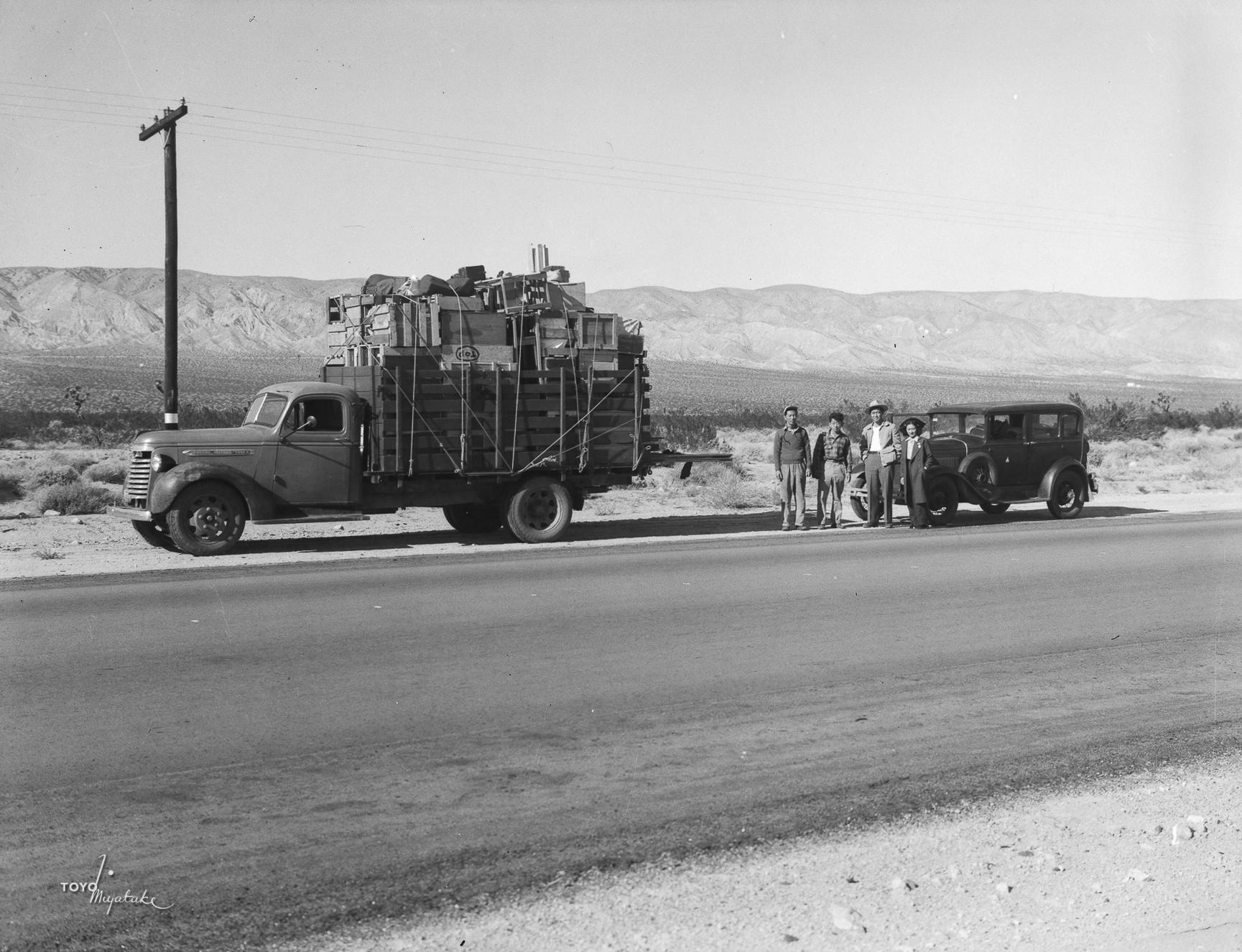
Although the photograph does not have a date, it is likely that the camera gear was transported back to Los Angeles sometime in mid-November of 1945. While members of the Miyatake family returned to Los Angeles, Toyo left for Chicago, Illinois, from Manzanar on November 20. He may have traveled with his close friend, Hiroshi Namadzue, to Chicago for a business venture or to visit friends who had relocated there.
Miyatake returned to Los Angeles shortly after, joining the rest of his family in the garage of their pre-war home in Boyle Heights. While the family had been at Manzanar, Miyatake had rented their home to doctors at White Memorial Hospital. One of the doctors was still occupying their home upon their return, so the family had to stay in the home’s four-car garage. The Miyatakes were able to move back in after the doctor attained a new position in Chicago. During this time, Toyo and Archie reopened the studio in Little Tokyo, servicing customers again by Christmas of 1945.