

Toyo Miyatake Studio: Past and Present
Capturing the Japanese American community for four generations
About Toyo Miyatake Studio
In 1923, Toyo Miyatake opened his eponymous portrait studio in Los Angeles’ Little Tokyo, amidst a constellation of other Japanese American-operated photography studios. The studio was originally located at the site of the former Paris Photo Studio in the Hotel Toyo at 233 1/2 East First Street. Around 1933, Miyatake closed his studio before returning to Japan to look after his terminally ill father. Tragically, his father passed away before he arrived in Shikoku, but Miyatake remained in Japan for a short period, honing his photography skills. He also attempted to operate photo businesses in Shikoku and Tokyo before deciding to return to Los Angeles. Toyo Miyatake Studio was reestablished at 364 E. First Street soon after his return.
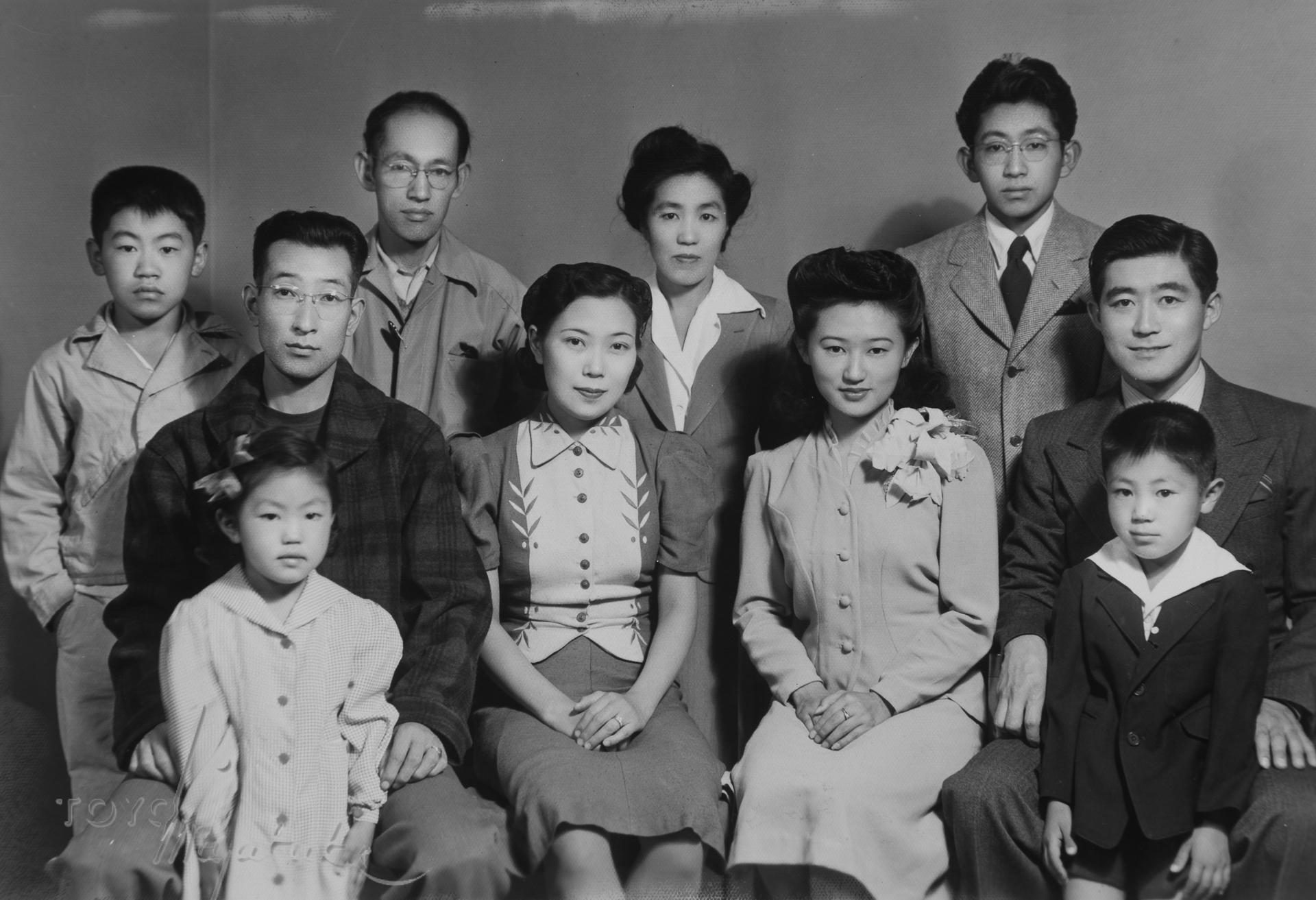
By 1940, Miyatake saw a growing demand for portraiture in the Terminal Island neighborhood of Long Beach. He invested in a time share studio in the new Murakami Building at 151 Terminal Way. While most of his time was still spent at the Little Tokyo studio, he traveled to the Terminal Island studio on Wednesdays. In addition to studio portraiture, Miyatake’s photographic services were sought out by businesses, cultural groups, and wedding couples in the pre-war era. Toyo Miyatake Studio has long remained the official photographer of Nisei Week, Little Tokyo’s longest-running ethnic festival in the country, which is held annually in August.
After December 7, 1941, Miyatake’s business was heavily impacted. Although the Little Tokyo studio continued operating, the volume of work from December through June of 1942 was very sparse. On June 1st, 1942, the Miyatake Family arrived at Manzanar. Although cameras were prohibited in camp, Miyatake snuck in a lens and some film holders with the intention of capturing the unfolding injustices. Miyatake collaborated with a machinist and a carpenter at Manzanar to form the body of a camera and mount the lens, creating a concealed camera that mimicked a lunch box. Accounts from son Archie and grandson Alan Miyatake estimate that Toyo began taking photographs with his homemade camera, Toyo’s Camera, towards the end of the summer of 1942. It wasn’t until December of 1942, with the arrival of Camp Director Ralph Merritt, that Miyatake became allowed to take pictures. At first, he was required to have a non-Japanese assistant click the shutter. On April 13, 1943, the Manzanar Co-op Photo Studio was opened in the Block 30 ironing room, with Toyo Miyatake as the studio manager. Toyo ran the studio alongside a number of other friends and photographers from 1943 until late 1945.
After returning to Los Angeles in late 1945, the Miyatakes resumed business at their previous location of 364 E. 1st Street. By 1948, the business had moved across and down to 318 E. 1st Street. The studio remained in this location for the following decades, with oldest son Archie Miyatake running the studio after the patriarch retired in 1960. Archie’s son, Alan, who was born in 1953, remembers starting his photography career at this historic location from a young age. The studio remained at 318 E. 1st Street until the building was demolished in 1985. Archie and Alan then migrated the studio to its current location at 235 W Fairview Ave in San Gabriel. Toyo Miyatake Studio continues to provide the Los Angeles community with professional photo services under the direction of Alan Miyatake and his daughter Sydney. The studio continues to serve as official Nisei Week Festival photographers, a responsibility of the studio that has been in place since Toyo Miyatake photographed the first Nisei Week in 1934.
While JANM is hosting this online exhibition, all photos in this collection remain the copyright of Toyo Miyatake Studios. For licensing information or questions about the images, please reach out to Alan Miyatake at toyomiyatake@sbcglobal.net.
Timeline of Toyo Miyatake’s Life
Explore the timeline to learn more about Toyo Miyatake’s life.
1895

Toyo Miyatake was born on October 28 in Kagawa-ken, Japan, to Jun and Kame Miyatake. He was the middle of three sons. The Miyatake family immigrated to the US in 1905, settling in Los Angeles.
1918

Miyatake began studying photography under noted photographer Harry K. Shigeta at his photographic studio and school in Little Tokyo. He balanced his studies with working in the Miyatake family’s bakery and confectionery in Los Angeles’s Little Tokyo neighborhood.
1923

Miyatake purchased the former Paris Photo Studio, located inside the Toyo Hotel at 233 ½ E. 1st Street. He opened Toyo Photo Studio in honor of the eponymous hotel amid a constellation of other Japanese American-operated photo studios in Los Angeles’s Little Tokyo. He later renamed the studio Toyo Miyatake Studio.
1920s

Miyatake became an active member of the Shaku-do-sha, a group of artists, writers, poets, and photographers based in Little Tokyo, dedicated to the advancement of all forms of modern art. Miyatake organized several photography exhibitions, including several of Edward Weston’s work. Miyatake was also associated with the Japanese Camera Pictorialists of California (JCPC), exhibiting in their shows and providing meeting space in his portrait studio.
1929

Miyatake became the official photographer to professional Japanese dancer, Michio Ito. Ito was in Los Angeles for several performances at the Hollywood Bowl, providing Miyatake with a fruitful opportunity.
1932

Miyatake photographed athletes representing Japan at the Summer Olympics in Los Angeles for the Asahi Shimbun newspaper.
1933

Miyatake returned to Japan after receiving news that his father was ill. He remained in Japan to experiment with photography and expand his body of work.
1934

Miyatake returned to Los Angeles on December 10 and continued operating his portrait studio at 364 East 1st Street in Little Tokyo. In addition to capturing portraits at this studio, he also photographed community events, including the annual Nisei Week festival in Little Tokyo.
1942

The Miyatake family was sent to Manzanar from Los Angeles on June 1. Miyatake put much of his photography equipment in local storage. Soon after arriving at Manzanar, Miyatake enlisted help from fellow incarceree Karl Kurata to outfit a homemade camera with a lens that he smuggled in amongst his personal belongings. Miyatake took photos secretly with this homemade camera, now known as Toyo's Camera. Through Edward Weston’s connections to Manzanar camp director Ralph Merritt, Miyatake was able to obtain permission to take photographs a short time later.
1943

The Manzanar Co-op Portrait Studio opened for business on April 12 in the ironing room of Block 30. The Co-op had received permission from Camp Director Ralph Merritt less than a month earlier. In addition to managing the Manzanar Portrait Studio, Toyo captured the landscape and daily life at Manzanar.
1945

Miyatake family left Manzanar on November 20 to return to their home in Los Angeles. By Christmas, Toyo Miyatake Studio reopened in their pre-war location at 364 E. 1st Street.
1946-1960

In addition to capturing portraits in his studio, Miyatake chronicled the Japanese American community in Los Angeles through his work for the Rafu Shimpo. By 1949, the Toyo Miyatake Studio moved down the street to 318 E. 1st Street, where it would remain for nearly 30 years. Miyatake retired from his photography career in 1960.
1971

Miyatake received the Nisei Week Pioneer of the Year award and several other civic honors toward the end of his career.
1979

Toyo Miyatake passed away in Los Angeles, CA. His sons, Archie and Robert Miyatake, and grandsons Alan and Gary Miyatake, continued Toyo’s legacy by continuing to operate the photography business under Toyo Miyatake Studio.
Pre-War Gallery
Explore a selection of photographs taken by Toyo Miyatake in the months leading up to forced relocation. These photographs capture glimpses of life in and around Los Angeles’ Little Tokyo between late 1941 and early 1942. Select the images below to explore.
Post-War Gallery
Explore a selection of photographs taken by Toyo Miyatake in the years immediately following the closure of War Relocation Authority Camps. These photographs capture the rebuilding of the Japanese American community in Los Angeles during the postwar years. Select the images below to explore.
Through Four Generations
Toyo Miyatake continued to operate the studio in the postwar years. Additionally, he continued to chronicle the Japanese American community in Los Angeles as the official photographer for the Rafu Shimpo newspaper and Nisei Week festival. By 1949, Toyo Miyatake Studio relocated to 318 E. 1st Street, where it would remain for nearly 30 years. While Toyo oversaw the artistic direction of the studio, his wife Hiro managed the business side of the studio, which was key to its success. Archie and his son Alan, who would both later take on the role of operating the studio, learned a lot from Hiro’s deft social skills in building relationships with clients. Miyatake retired from his photography career in 1960, passing the business to his sons Archie and Robert “Bob.” Both observed their father’s craft for years while also learning photography techniques through formal art classes. Despite officially retiring, Toyo still insisted on having Archie take him to the studio often.
By the late 1960s, Archie’s sons, Alan and Gary, began helping around the studio. Alan recalls the invaluable opportunity to observe the master at work. While Toyo was not very talkative in the studio, Alan learned much from watching his grandfather work. Over the next decade, Alan continued to learn and work alongside his father, Uncle Robert “Bob,” Uncle Richard “Tabo,” Auntie Minnie, and cousin Carl as they all supported various aspects of the studio’s inner workings.
Following Hiro’s death in 1971, Archie’s wife, Takeko, took on the role of operating the business. Toyo would continue to make appearances at the studio until his death in 1979.
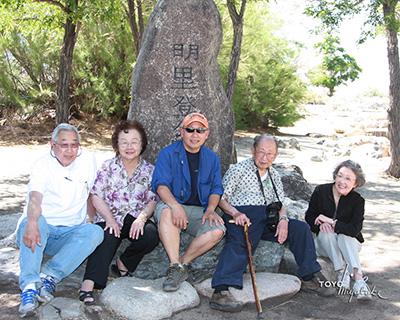
In 1985, Archie and Alan migrated the studio to its current location at 235 W Fairview Ave in San Gabriel, about 10 miles east of Los Angeles’ Little Tokyo neighborhood. Archie continued to run the studio for a number of years until Alan took over operations in the mid 1990s. Yet, just like his father, Archie continued doing work around the studio even after retirement. He spent a lot of time working through the studio's archives, including Toyo Miyatake’s photographs from Manzanar. During this time, Archie and his nephew Carl Miyatake curated The Official Set from the Manzanar collection in the late 1990s. Archie remained active at the studio and within the Japanese American community until his death in 2016.
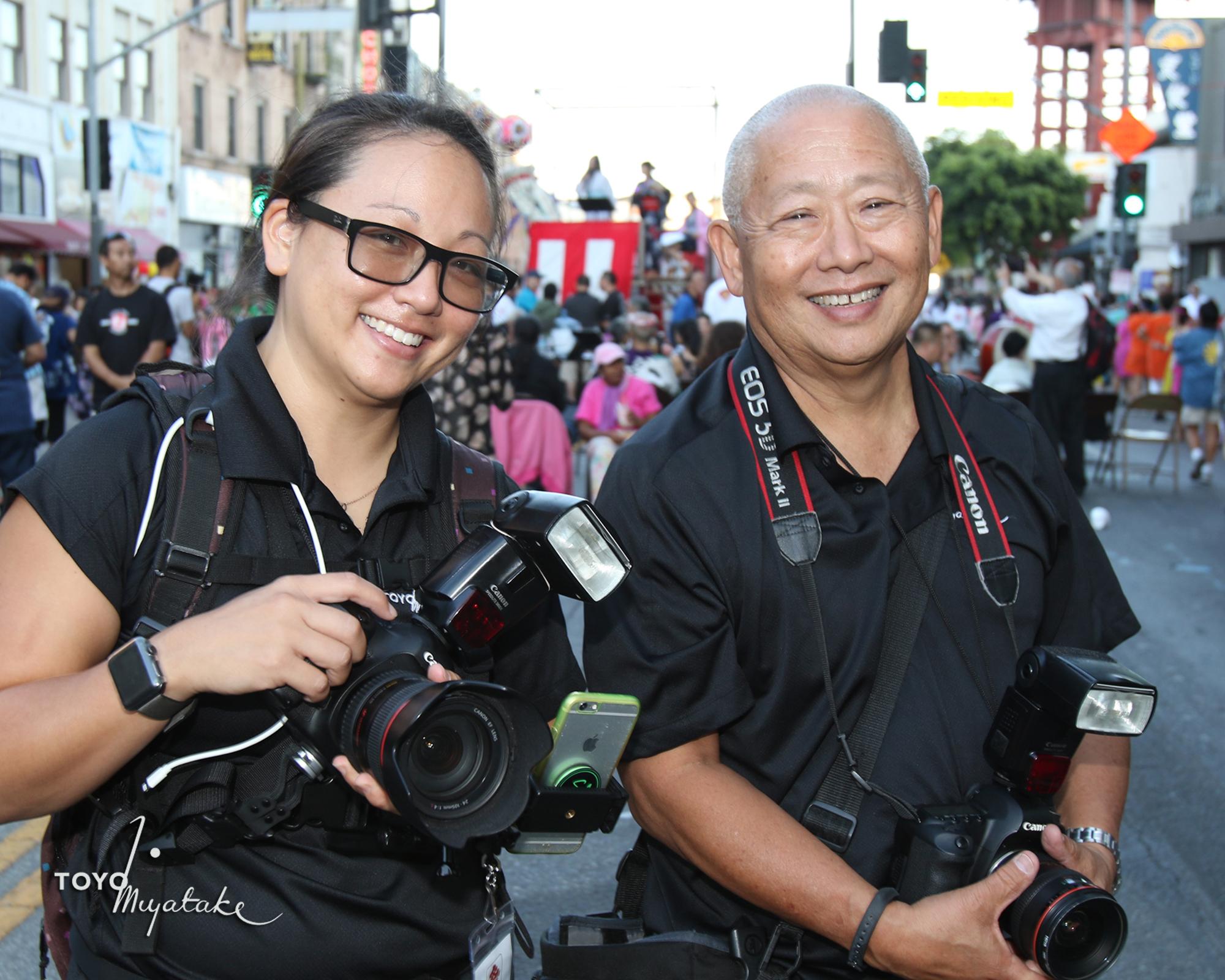
For the last three decades, Alan Miyatake has operated Toyo Miyatake Studio and stewarded the photo archive that has been amassed over the last hundred years. One of Alan’s daughters, Sydney Miyatake, works alongside Alan, marking four generations within the family business. As a true family business, Alan’s wife April and daughter Lindsey have supported Toyo Miyatake Studio in various ways. Just this year, Alan received the 2026 Nisei Week President’s Award, commemorating his contributions to Japanese American communities. Alan continues to write a new chapter for Toyo Miyatake Studios, honoring the legacy of his family's business, while also making his own unique contributions to their story.
Alan Miyatake and the Studio at present

As the third-generation proprietor of Toyo Miyatake Studio in San Gabriel, CA, Alan Miyatake is mindful of the legacy that he carries forward. Like his father, Archie, and his grandfather, Toyo, Alan continues to document Japanese American life through photography of events in the community, such as the annual Nisei Week festival. Additionally, he continues to capture significant life moments, including: births, graduations, marriages, formal family portraits, and memorial services. Documenting the Japanese American community for posterity is something that the Miyatake family has been doing for generations through their studio for over one hundred years.
While JANM is hosting this online exhibition, all photos in this collection remain the copyright of Toyo Miyatake Studios. For licensing information or questions about the images, please reach out to Alan Miyatake at toyomiyatake@sbcglobal.net.
JANM’s Collections Management & Access team worked alongside Alan Miyatake of Toyo Miyatake Studio to digitize, catalog, and rehouse thousands of Toyo Miyatake’s photographs from Manzanar and the surrounding pre- and postwar years. Alan introduced his studio and collection to numerous JANM interns and employees across the 3 year timespan of this endeavor. Although this collection only represents a fraction of Toyo Miyatake’s studio archives, it is an important step in ensuring the long term preservation of his work. This exhibition represents a great milestone for Toyo Miyatake studios, marking the first time such a large subset has been made available for online viewing. Alan is pleased to introduce his family’s work to a broader audience, and connect these historical photographs to families today.